
Find out what your child needs most right now. Answer 6 quick questions and get a free personalised play plan. The one area where your child is most ready to grow, and the specific Hub programs to match.
A moment like this
Want to be able to message a therapist and get some guidance when you're stuck or unsure what to try next?
The Play Way's Ask a Therapist is now available.
Tell us what's going on, what you've already tried, and where you feel stuck. Our therapy team read, watch or listen to what you've described, consider what they would try next, why, and recommend any relevant resources from our Hub that might help, and reply to you within one business day.
Some children are able to move through their daily routines fairly independently after a bit of practice. Others really struggle to remember the order, understand the timing, and hold it all in their head at once.
A routine also works at a smaller size. Brushing teeth is a routine of its own, and so is washing hair. Some children come unstuck there, at one task, where the task itself is the problem. Others have every task sorted and still cannot string them together. Both are routines, and both are what we work on.
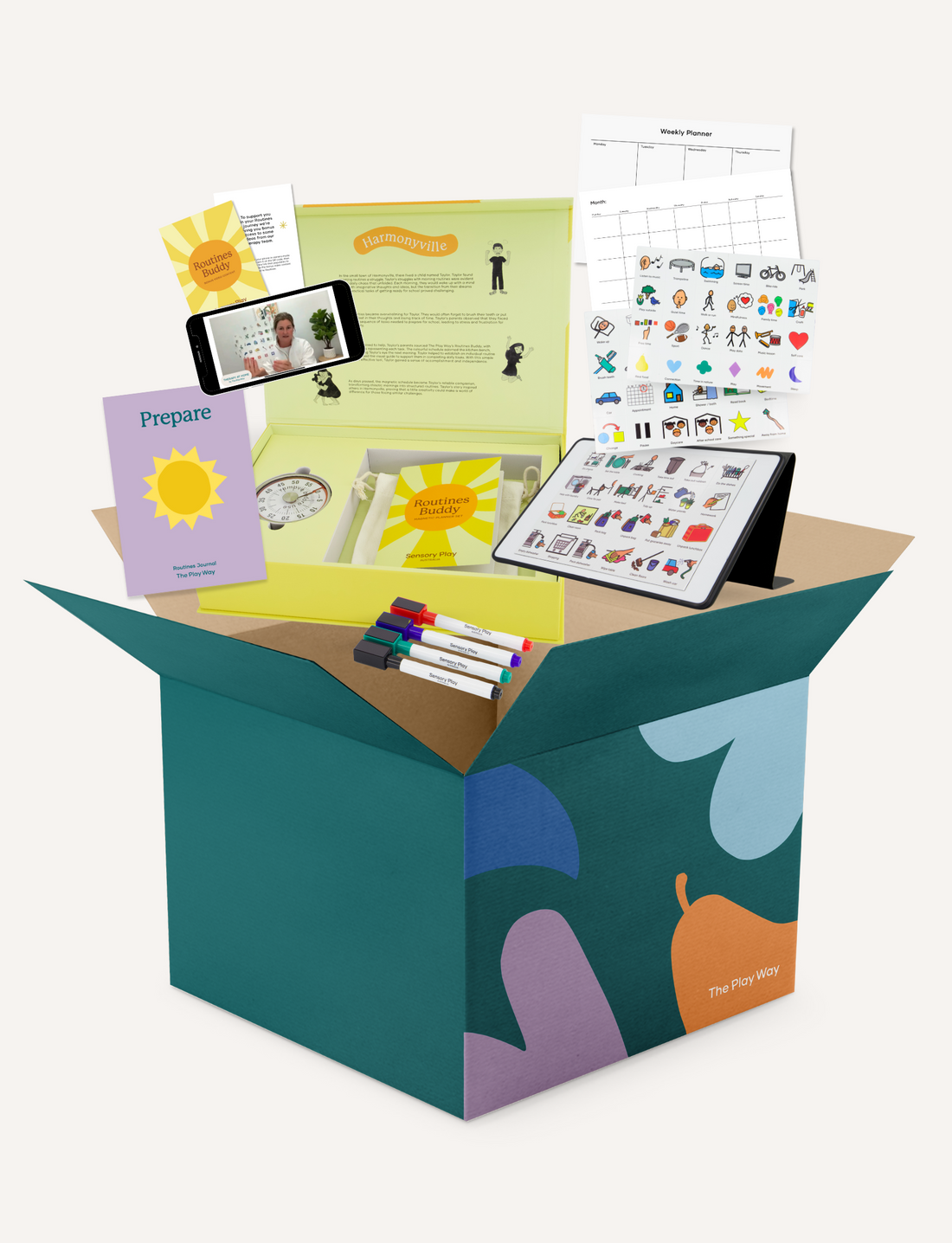
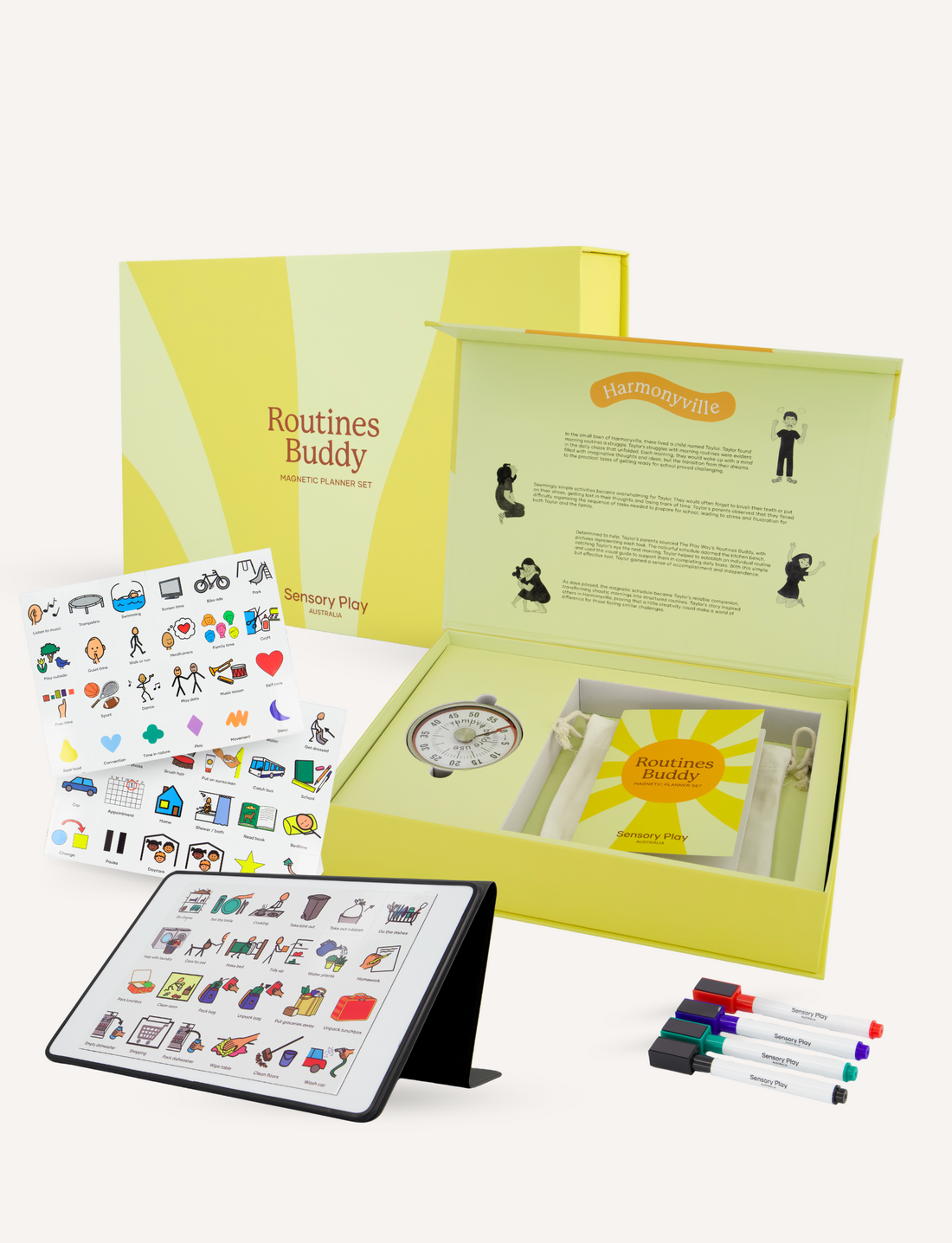
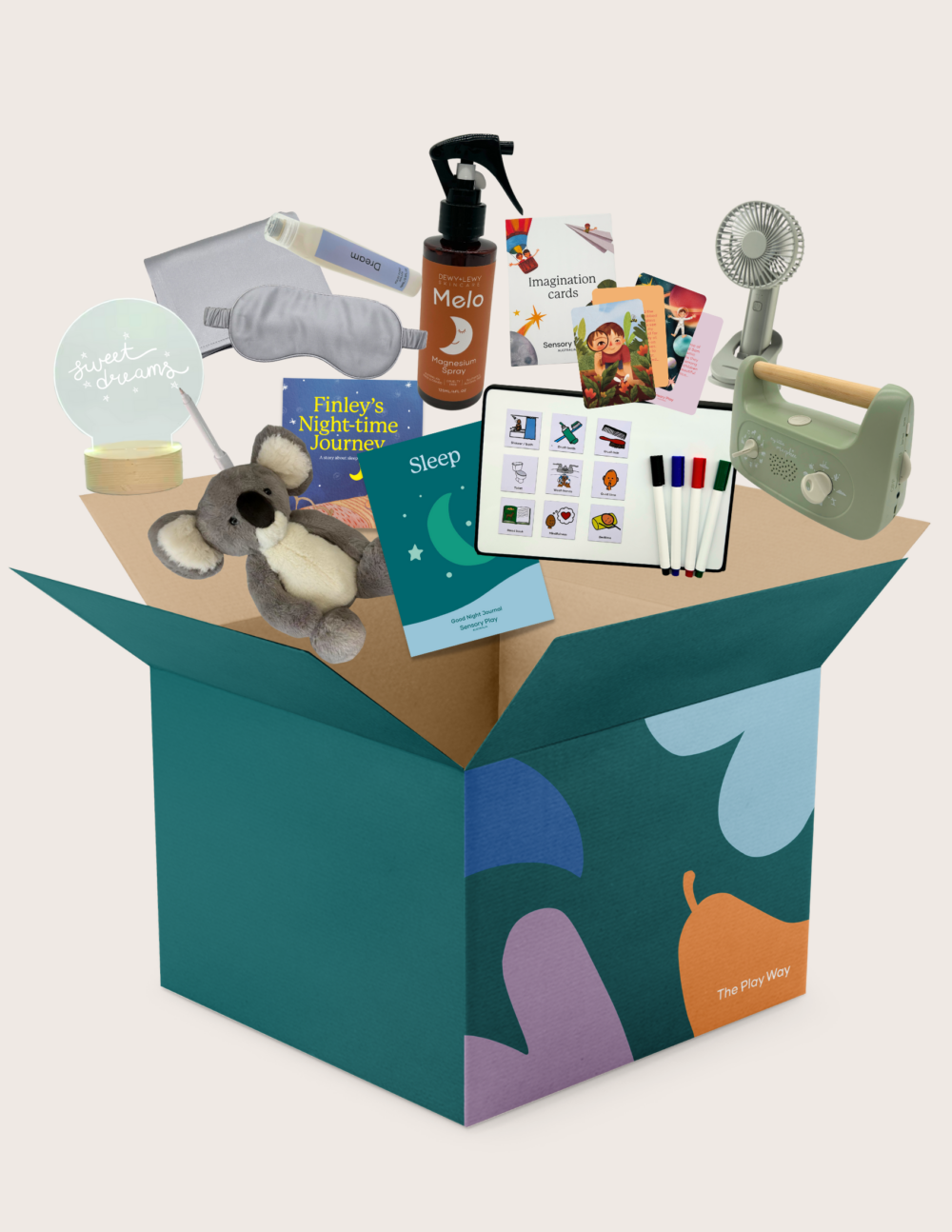
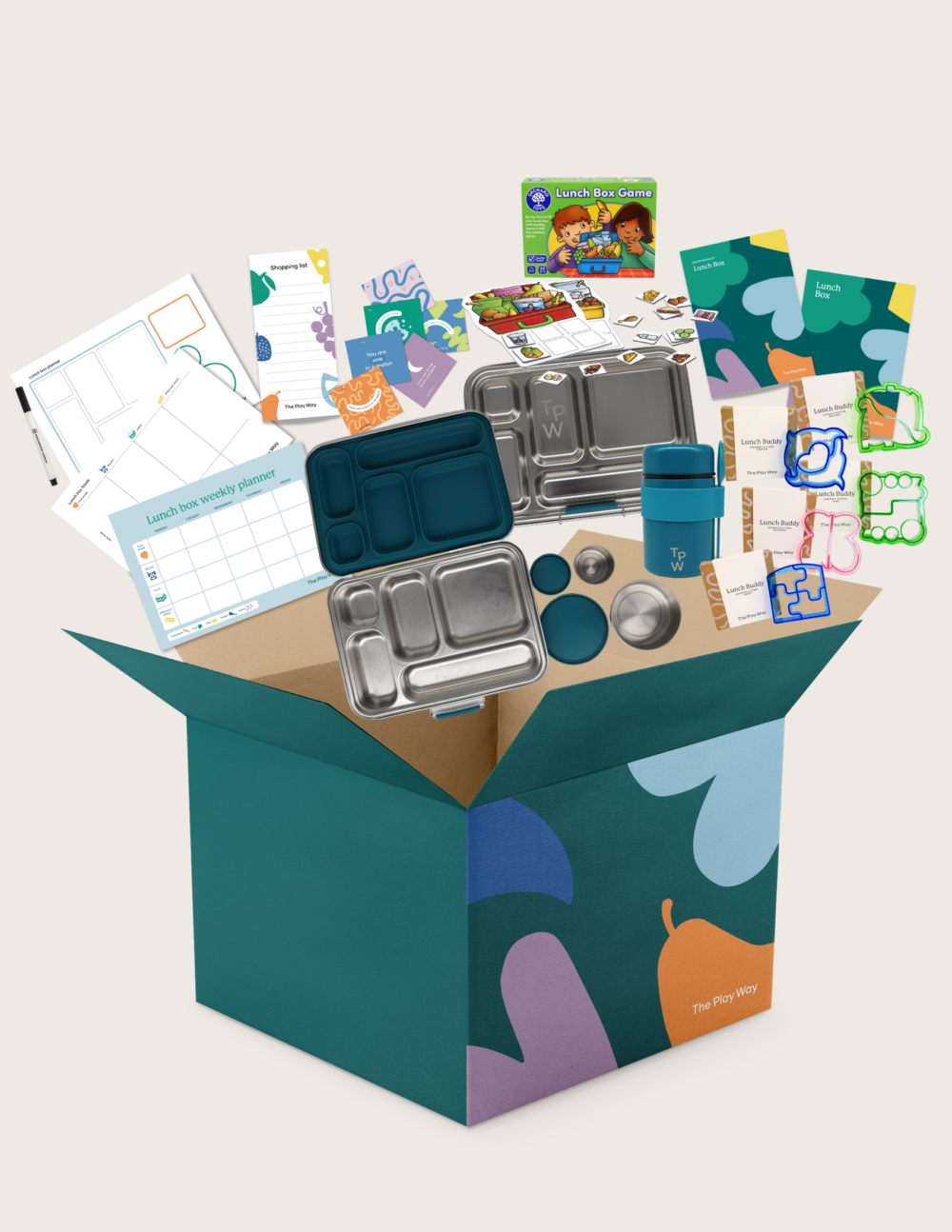
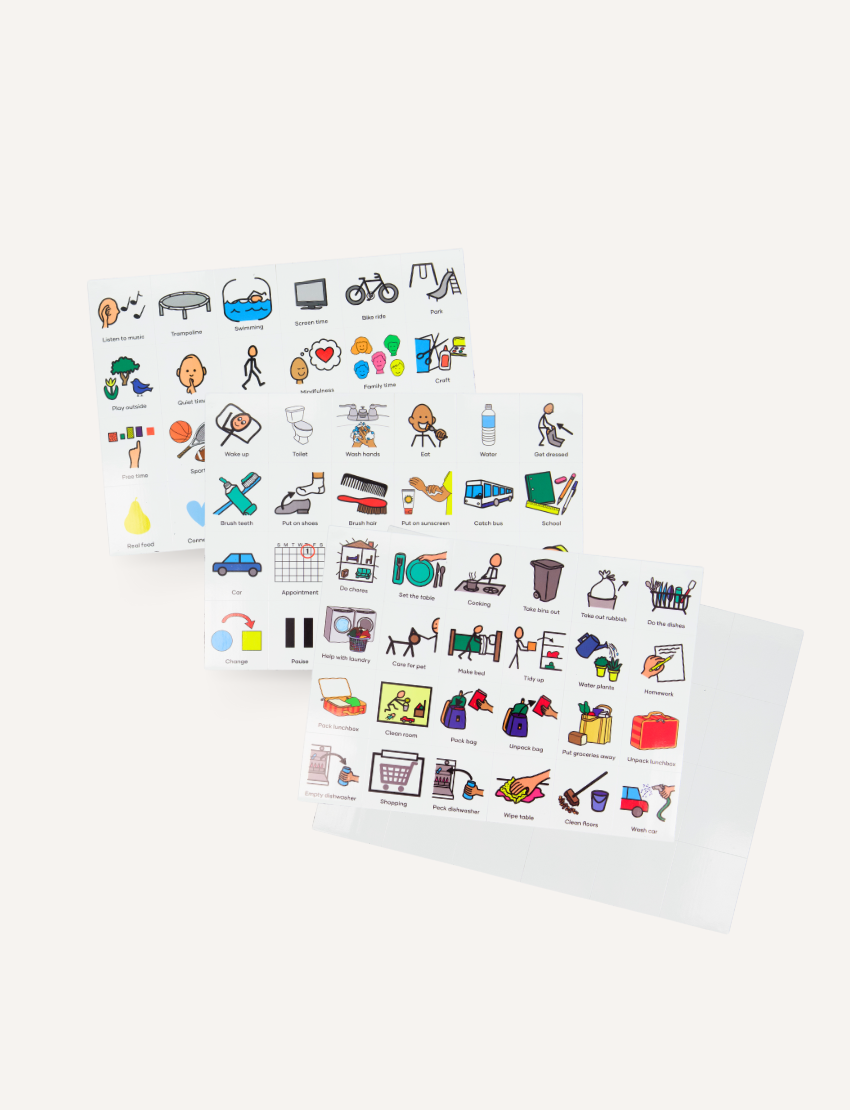
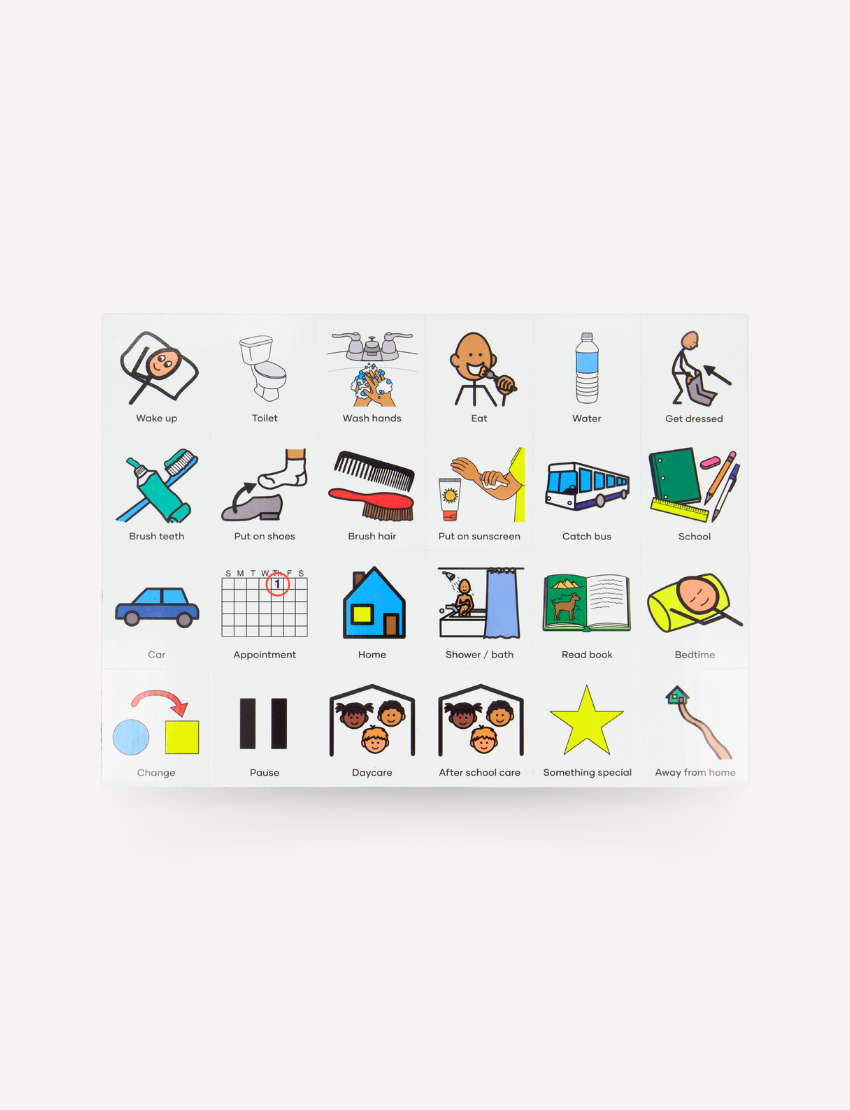
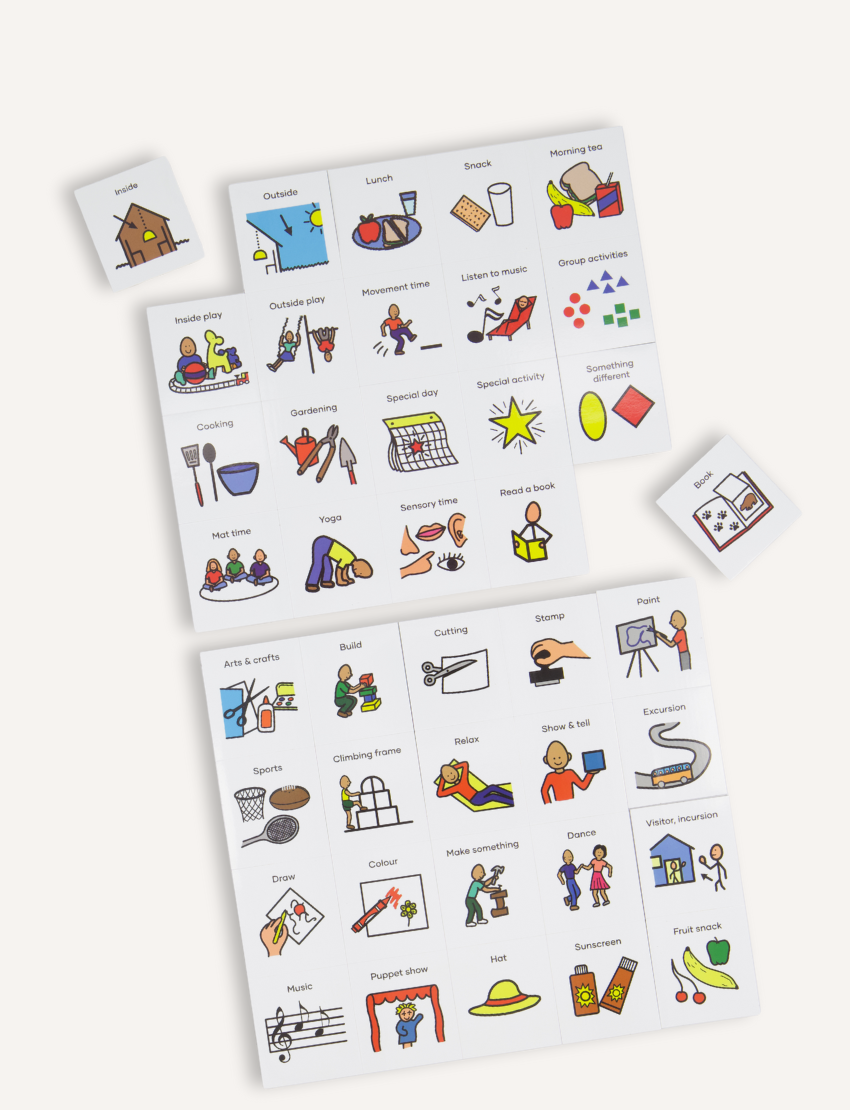
Our tools cover all of these challenges. Magnet sets for the morning, for kinder, for school and for bedtime. Planners for a day, a week or a month. Timers that show a child how much time is left instead of telling them. A lunch planning kit for the task of planning and packing lunch, a bedtime buddy with a story and a journal, and play kits with the teaching from our therapy team.
Looking for the magnet planners on their own? See our visual schedules.
Some children come unstuck at one task, and some at holding the whole order in their head. These are starting points for both.
A moment like this
A moment like this
A moment like this
A moment like this
A moment like this
A moment like this
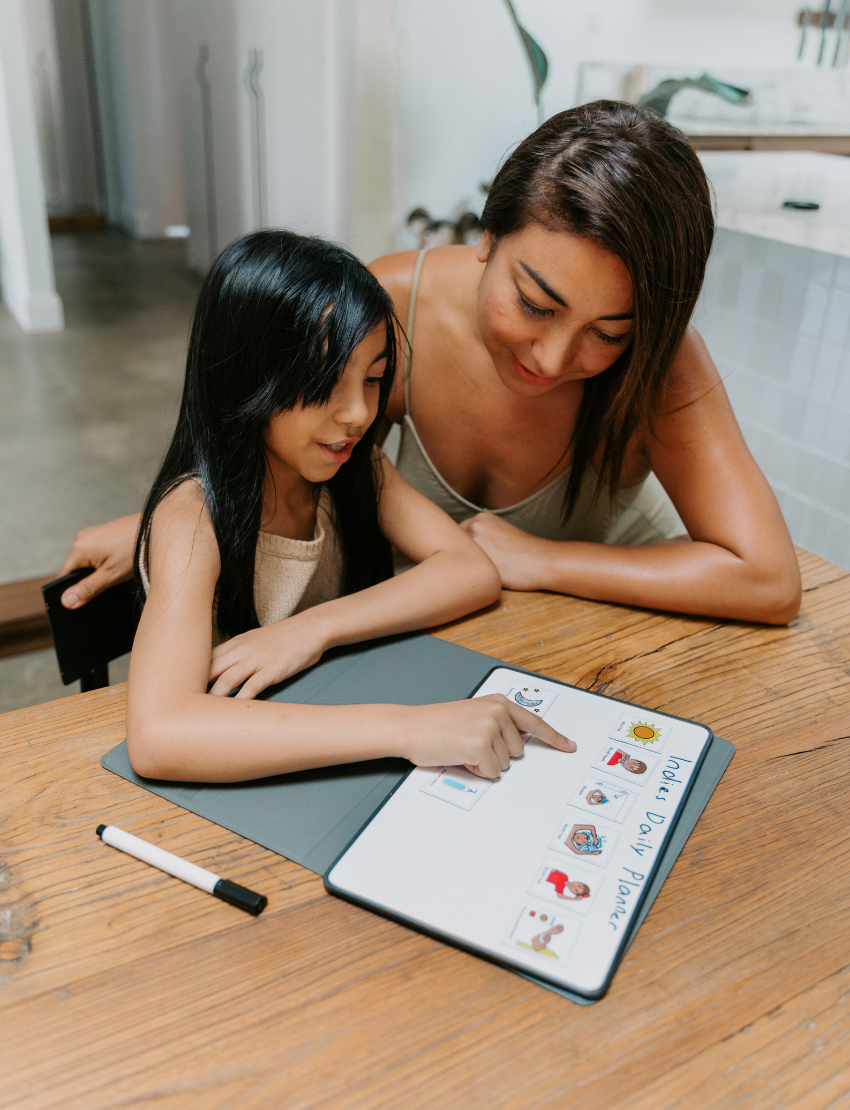
First work out which part is hard. A routine often falls apart because a child is holding six steps in their head while being hurried. Sometimes one of the steps is the problem on its own, and the rest only looks slow because of it. Once you know which it is, put the order somewhere they can see it, let them move the magnet themselves, and say less. Build it with them so it is their routine rather than your list.
Move as much as possible to the night before, then make mornings as simple as possible. Decide the order together with your child, and keep it the same every day so nobody has to think. The arguing usually drops when the routines board answers the question instead of you.
Watch where it actually stalls before you change anything. Sometimes it is the order and the timing, and a child who can get dressed, eat breakfast and find their shoes is still defeated by doing all three in a row before a deadline. Sometimes it is one task inside the morning routine, and the whole thing only looks slow because of that one spot of friction. A visible order helps with the first challenge. For the second one, it is worth asking what makes that task hard and focus on building them up there, rather than asking them to hurry.
A timer a child can see rather than hear. Sand timers or visual timers show time running out visually, so a child knows how much is left without asking and without being able to read numbers. They are useful for the part of a routine that drags, and for warning a child that a change is coming. They also really help people who experience time blindness which is common in neurodivergence.
There is no right number for every family, and this is really something you have to trial and error in your own circumstance. What helps more is knowing how long your unique routine takes. Time it honestly each day for a week, then work backwards from when you need to leave. Consider moving things to the night before if that helps, and look at the order things are done in and see if there are better ways to setup for success in the order you create from there.
Find out what your child needs most right now. Answer 6 quick questions and get a free personalised play plan. The one area where your child is most ready to grow, and the specific Hub programs to match.
Acknowledgement of Country
The Play Way would like to acknowledge the Yorta Yorta people who are the traditional custodians of the land on which our head office is located; where we gather, work, create and learn. We pay respect to their tribal Elders, we celebrate their continuing culture and we acknowledge the memory of their ancestors.
©2026 The Play Way All rights reserved
If you plan to claim these products/programs using NDIS funds DO NOT process this order. Once this order is confirmed there is no refund for change of mind or being unable to claim a reimbursement from the NDIS (see our returns policy for details). Almost all of the products on our website are now on the OUT list, the 12 month grace period is over, your claim will not be successful and you will likely have to repay the NDIS for misused funds.
Our Hub Members enjoy a year round discount of 30% off our store. Become a member today from $14.99/month and enjoy these perks + more. Learn more